
'/%3E%3C/svg%3E)
'/%3E%3Cpath%20fill='%23b2b2b2'%20d='M241%20382q0%2016%2017%2026%2017%2011%2042%2011t42-11q16-11%2017-26V269H241'/%3E%3Cpath%20fill='%239f7e00'%20d='M241%20379q0%2014%208%2023%209%209%2021%209%2014%200%2021-9%209-9%209-23V269h-59'/%3E%3Cpath%20d='M241%20339v-70h59v110q0%2014-9%2023l-6%205v-68h-15v72q-8%200-14-4v-68zm59%2040c0%2022%2015%2032%2029%2032%2021%200%2030-18%2030-32v-40h-59'/%3E%3Cpath%20fill='%239f7e00'%20d='M266%20277v5h2v12h-3v-5h2v-5h-9v5h2v5h-4v9h3v18h-5v10h34v-10h-5v-18h3v-9h-4v-5h2v-5h-9v5h2v5h-3v-12h2v-5zm42%20101q0%2010%206%2017%206%206%2015%207%2010-1%2016-7%206-7%206-17v-29h-43'/%3E%3Ccircle%20fill='%230044ad'%20cx='329.5'%20cy='372'%20r='6'/%3E%3Cellipse%20fill='%230044ad'%20cx='300'%20cy='340'%20rx='16'%20ry='21'/%3E%3C/svg%3E)

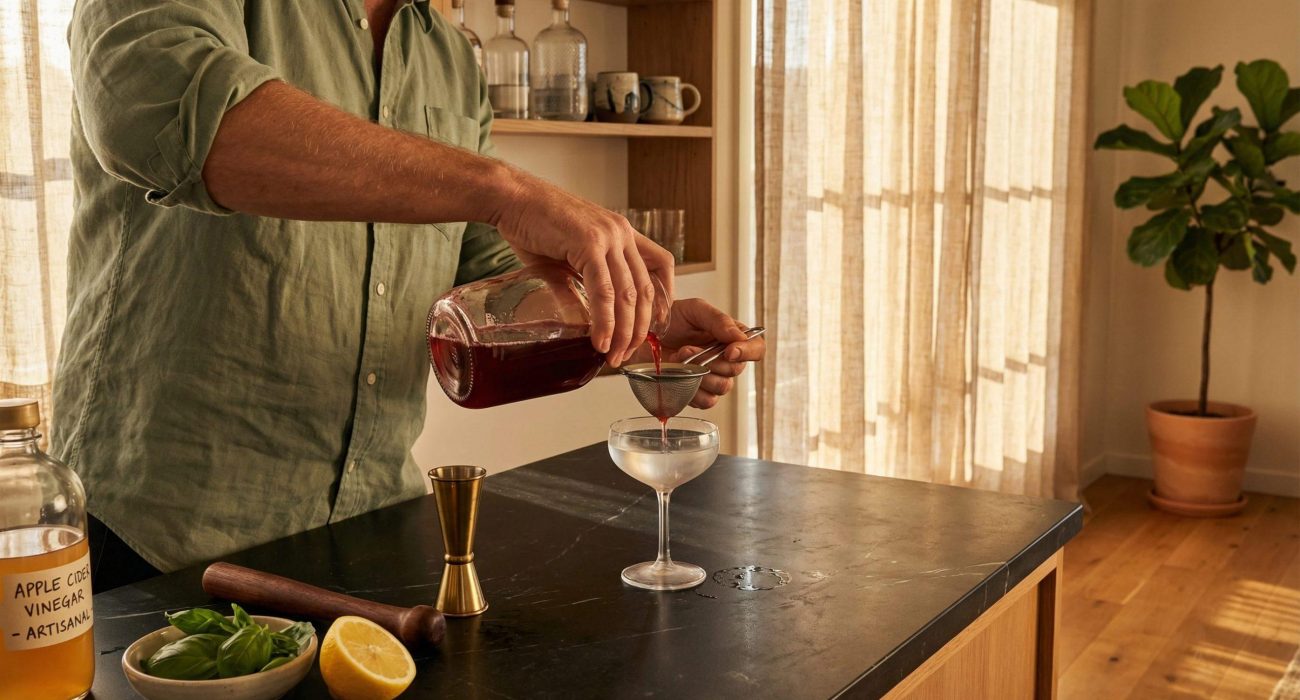

Shrubs are one of the most interesting trends in modern mixology. They are preparations made with fruit, vinegar and sugar, creating a balance between acidity, sweetness and fruity aromas.
Their versatility means they can be used in both traditional cocktails and mocktails or alcohol-free cocktails, a category that is becoming increasingly present on restaurant, bar and HORECA menus.
In this article, we look at what shrubs are, their history, how they are prepared, their applications in mixology and some interesting combinations for both alcoholic and alcohol-free drinks.
Understanding the uses of vinegar in cocktails opens up new possibilities for adding freshness, complexity and character to cocktails and mocktails.
What Are Shrubs?
Shrubs are preparations made mainly from fruit, vinegar and sugar.
They are usually served as an aromatic concentrate that can then be mixed with sparkling water, soda, tonic, juices or other beverages, both alcoholic and alcohol-free.
The combination of vinegar and fruit creates an acidic, sweet and aromatic profile, adding depth and complexity to drinks.
This versatility has made shrubs particularly interesting for bartenders and professionals looking to create distinctive beverages.
History and Origins of Shrubs
Shrubs have a long history linked to fruit preservation and the preparation of aromatic drinks.
Their origins are associated with traditional preparations made from fruit, sugar and acidic ingredients, which evolved over time and became part of different gastronomic cultures.
Shrubs were later incorporated into mixed drinks and eventually found a new place within modern mixology.
Today, they are enjoying renewed popularity thanks to growing interest in natural ingredients, distinctive flavour profiles and new approaches to cocktails, particularly within the expanding world of mocktails.
How Is a Shrub Made?
A shrub can be prepared by combining fruit, sugar and vinegar and allowing the flavours to develop over a certain period of time.
A simple preparation may follow these steps:
- Select the fruit, such as strawberries, raspberries, peaches or pineapple.
- Macerate the fruit with sugar to help extract its juices and aromas.
- Add the chosen vinegar.
- Allow the mixture to rest so that the flavours can develop.
- Strain and store the resulting concentrate.
The type of vinegar used will have a direct influence on the finished profile.
Apple cider vinegar, for example, provides smooth, fruity notes, while certain wine vinegars or speciality vinegars can create more intense and complex profiles.
What Does a Shrub Add to a Cocktail?
Using shrubs in cocktails offers many possibilities from a sensory point of view.
Their acidity can help to:
- Balance sweet ingredients.
- Add freshness.
- Introduce aromatic complexity.
- Enhance fruit, herb and spice notes.
- Create profiles that are different from those achieved using only juices or syrups.
As shrubs are concentrated, relatively small quantities can significantly change the profile of a drink.
This makes them particularly interesting for creative and professional mixology.
Shrubs and Mocktails: Alcohol-Free Cocktails with More Character
A mocktail is a cocktail made without alcohol. Although a mocktail does not necessarily contain a shrub, shrubs have become a particularly interesting ingredient for this type of drink.
The acidity of vinegar helps provide structure and complexity, two characteristics that can be more difficult to achieve when alcohol is removed from a recipe.
By combining a shrub with ingredients such as:
- Sparkling water.
- Tonic water.
- Ginger beer.
- Fruit juices.
- Infusions.
- Aromatic herbs.
- Spices.
- Fresh fruit.
it is possible to create alcohol-free drinks with much more developed flavour profiles.
For example:
- Red berry mocktail: raspberry shrub, sparkling water and fresh berries.
- Apple and ginger mocktail: apple shrub, ginger beer and a slice of apple.
- Tropical mocktail: pineapple shrub, sparkling water, lime and mint.
- Balsamic mocktail: a small amount of balsamic speciality combined with red berries, citrus and soda.
For restaurants, hotels and bars, shrubs make it possible to develop a more creative and distinctive alcohol-free drinks menu, moving beyond traditional options based only on soft drinks or juices.
Shrub Combinations to Try
There are many combinations that can be used as a starting point:
- Strawberry and basil shrub. Combines the fruity profile of strawberry with the aromatic notes of basil.
- Peach and ginger shrub. A fruity combination with a slightly spicy touch.
- Pineapple and mint shrub. A fresh, tropical option particularly suited to summer drinks.
- Raspberry shrub. Its acidic and fruity profile works well in both cocktails and mocktails.
- Apple shrub. Smooth and versatile, particularly well suited to spices, ginger and citrus fruits.
Using different fruits, herbs and spices makes it possible to create unique recipes adapted to the concept of each establishment.
Which Cocktails Can Shrubs Be Used In?
Shrubs can be incorporated into many cocktails to add a new dimension of flavour.
Some examples include:
- Mojito with shrub. Adding a fruit or herb shrub to provide a different type of acidity.
- Strawberry shrub whisky sour. Combining whisky with a fruity, acidic profile.
- Sangria with fruit shrub. Adding greater complexity and freshness.
- Gin cocktails. Red berry, apple or herb shrubs can work particularly well with gin and tonic.
- Rum cocktails. Tropical combinations with pineapple, mango or citrus offer many possibilities.
The aim is not necessarily to replace other ingredients, but to use the shrub as another tool to balance and personalise the drink.
Which Vinegar Should Be Used to Make Shrubs?
Choosing the vinegar is one of the factors that most influences the finished result.
Some particularly interesting options include:
- Apple cider vinegar, for its smooth, fruity character.
- White wine vinegar, for fresher, cleaner profiles.
- Balsamic vinegar, when greater body and complexity are required.
- Infused vinegars, which can introduce herbal and spice notes directly.
- Fruit specialities, particularly interesting for creative mixology.
At Goyval Vinagres, our Yuca’s range includes different products that can bring very different profiles to this type of preparation.
We also offer specialities such as raspberry vinegar glaze and apple vinegar and honey glaze, which can inspire new applications in gastronomy and creative mixology.
Current Trends: Shrubs, Mocktails and New Experiences
In recent years, shrubs have regained popularity within mixology and the restaurant sector.
Bartenders are increasingly looking for ingredients that can bring distinctive flavour profiles, combining fruits, herbs, spices, vinegars and other elements to develop their own recipes.
This is happening alongside the growth of mocktails and alcohol-free cocktail menus, which are becoming increasingly sophisticated and creative.
For the HORECA sector, this trend creates new opportunities to offer:
- Signature alcohol-free drinks.
- Alternative pairings.
- Different aperitifs.
- Premium drinks.
- Options for customers who prefer not to drink alcohol.
Shrubs are particularly well suited to this type of experience because they can provide complexity, acidity and character without relying on alcohol.
Goyval Vinagres | Vinegars for Cocktails and Mocktails
Understanding the uses of vinegar in cocktails opens up new possibilities for creating balanced, fresh drinks full of character.
Shrubs can be used in both traditional cocktails and mocktails, providing a combination of acidity, fruit and aromatic notes with numerous possibilities for bartenders, restaurants, hotels and other HORECA professionals.
At Goyval Vinagres, we produce a wide range of vinegars and specialities that can be used to develop distinctive gastronomic and mixology concepts, from apple cider and wine vinegars to balsamics, infused vinegars and fruit specialities.
If you are looking for a vinegar or speciality product to develop new cocktails or alcohol-free drinks, contact our team and we will help you find the option that best suits your project.