


How Vinegar Quality Is Controlled in Production | Processes, Analysis and Traceability

Vinegar production in the food industry requires thorough control at every stage of the process to ensure stability, food safety and batch-to-batch consistency. Factors such as fermentation, raw materials, acidity and traceability directly influence the quality of the final product.
At Goyval Vinagres, we have been producing vinegar for 30 years for the food industry, distributors and international customers. During this time, we have seen that rigorous quality control is essential to ensure continuity of supply and maintain consistent quality between batches.
Understanding how vinegar quality is controlled in production is essential for manufacturers, distributors and food industry professionals who need reliable products adapted to industrial processes. Below, we look at the main controls and parameters used in vinegar production.
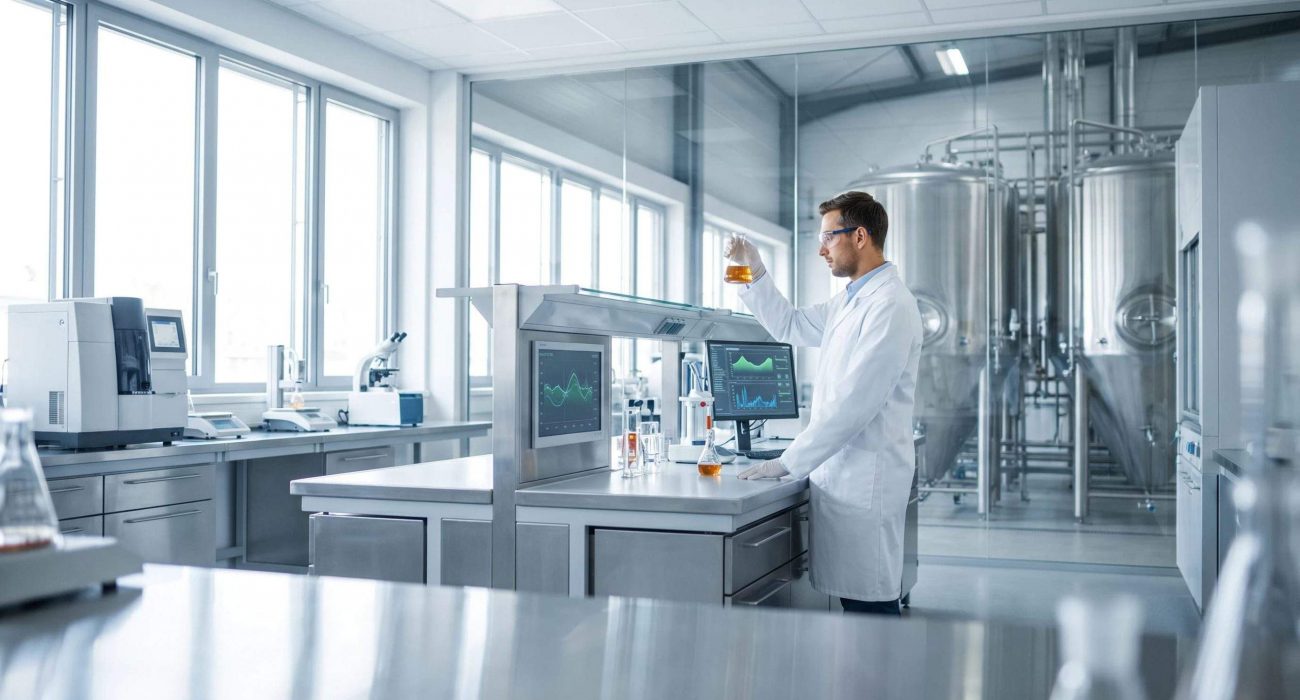
Vinegar Quality Control Laboratory
Vinegar quality control is carried out in specialised laboratories where different physico-chemical, microbiological and sensory parameters are evaluated.
The most common analyses include:
- Total acidity measurement.
- pH control.
- Microbiological evaluation.
- Colour and appearance checks.
- Organoleptic analysis of aroma and flavour.
These controls make it possible to detect deviations in the production process and ensure that the vinegar meets the technical specifications defined for each application. At Goyval, we carry out continuous controls to ensure that each batch maintains the characteristics agreed with our customers.
In industrial production, having fast and accurate analysis systems is key to maintaining product stability and reducing incidents.
How Is Vinegar Quality Controlled in Production?
To understand how this control is carried out, it is necessary to analyse all stages of the process, from raw material reception through to storage and final supply.
The process begins with the selection of the raw material and continues throughout acetic fermentation, where critical variables must be monitored, such as:
- Temperature.
- Oxygenation level.
- Alcohol concentration.
- Fermentation time.
- Final acidity.
At our facilities, these parameters are continuously monitored to ensure product homogeneity and maintain consistent quality between batches.
In addition, process documentation and traceability are essential for complying with quality and food safety requirements.
What Is Acetic Fermentation and Why Is It Important?
Acetic fermentation is the biological process by which bacteria of the genus Acetobacter transform the alcohol present in the raw material into acetic acid in the presence of oxygen.
This stage is crucial because it directly influences:
- The sensory profile of the vinegar.
- Product stability.
- Final acidity.
- Microbiological quality.
Poor control during this stage can result in:
- Flavour variations.
- Stability problems.
- Deviations in acidity.
- Reduced production efficiency.
For this reason, industrial production is carried out under controlled conditions and with continuous monitoring systems. At Goyval, we continuously supervise the progress of fermentation to ensure that each batch reaches the desired characteristics.
Variables That Influence Acetic Fermentation
Vinegar quality depends to a large extent on the control of certain variables during fermentation.
- Temperature. Directly influences bacterial activity and the speed of the process.
- pH. Maintaining suitable conditions is essential to support the activity of acetic acid bacteria.
- Oxygenation. Oxygen is essential for the transformation of alcohol into acetic acid.
- Fermentation time. Insufficient time can affect product development, while excessive time may alter its organoleptic characteristics.
- Raw material quality. The purity and stability of the ingredients used have a direct impact on the final result.
In the food industry, constant control of these variables helps maintain stable and repeatable processes.
What Raw Materials Are Used in Vinegar Production?
The raw materials used determine many of the characteristics of the vinegar.
The most common include:
- Wine.
- Alcohol of agricultural origin.
- Cider.
- Cereals.
Each one contributes specific characteristics in terms of aroma, flavour and final application.
Before entering the production process, these raw materials must pass quality controls relating to:
- Chemical composition.
- Purity.
- Stability.
- Absence of contaminants.
At Goyval, we believe vinegar quality begins long before fermentation. For this reason, the selection and verification of raw materials is a fundamental part of our production process.
How Is Vinegar Production Automated in the Food Industry?
Automation has significantly optimised quality control in vinegar production. Today, many facilities use automated systems capable of monitoring and adjusting parameters in real time.
These systems make it possible to:
- Control temperature and oxygenation.
- Record production data.
- Detect deviations automatically.
- Improve process efficiency.
- Reduce operational errors.
Automation also facilitates continuous production and improves repeatability between batches, which is particularly important in industrial applications.
Continuous Production and Batch-to-Batch Consistency
In the food industry, one of the main challenges is maintaining homogeneous quality in large-scale production.
To achieve this, it is necessary to control:
- Acidity stability.
- Flavour uniformity.
- Physico-chemical composition.
- Product behaviour in different applications.
Continuous production helps reduce variations and improve operational efficiency, particularly for manufacturers working with large volumes.
Many of our customers use vinegar as an ingredient in sauces, preserves and pickles and other food applications where stability is essential. For this reason, we work to ensure a high level of batch-to-batch consistency and provide a product that remains reliable over time.
What Analytical Techniques Are Used to Evaluate Vinegar Quality?
The vinegar industry uses different analytical techniques to verify product quality.
- Chromatography. Used to analyse chemical composition and detect possible deviations.
- Spectroscopy. Used to evaluate physico-chemical properties.
- Microbiological analyses. Help ensure food safety and product stability.
- Organoleptic evaluation. Assesses aspects such as aroma, flavour and appearance.
These techniques help ensure that the vinegar meets the technical specifications required for each industrial application.
Why Is Traceability Important in Vinegar Production?
Traceability is an essential part of vinegar quality control.
It allows complete tracking from:
- Raw material.
- Fermentation process.
- Storage.
- Final supply.
This helps to:
- Detect incidents quickly.
- Ensure regulatory compliance.
- Improve food safety.
- Maintain production records.
At Goyval, traceability forms part of our control system and enables us to monitor each batch from start to finish, providing transparency and confidence for our customers.
Formats and Logistics Control for Industry
In addition to production, vinegar quality also depends on correct storage and supply.
The most common industrial formats include:
- IBCs.
- Tankers.
- Flexitanks.
- ISO tanks.
- Palletised packaging.
At Goyval, we supply vinegar in different formats adapted to the needs of each customer, including food manufacturers, distributors and international importers.
Proper control during transport and storage helps maintain product stability and prevents changes to its characteristics.
In summary, understanding how vinegar quality is controlled in production is key to ensuring safe, stable products adapted to the requirements of the food industry. Controlling variables such as fermentation, acidity, raw materials and traceability helps maintain efficient processes and consistent results.
Working with specialised suppliers and appropriate control systems is essential to ensure continuity of supply and consistent quality in industrial applications.
At Goyval Vinagres, we apply these controls every day to provide a reliable, stable product adapted to each customer’s requirements. Our 30 years of experience, together with our production capacity and commitment to quality, allow us to supply vinegar to manufacturers, distributors and food industry professionals both in Spain and international markets. Contact our team to discuss the needs of your project.